The Power of Safe and Supportive Relationships in the Healing Journey

Healing rarely follows a straight line. It circles back, stalls, surges forward, and sometimes feels like it has stopped altogether. But one thing research keeps confirming is this: the people around us shape how we recover, far more than most of us realize.
A study cited by the American Psychological Association found that people with strong social support networks are 50% more likely to experience better mental health outcomes. Among Vietnam veterans, those with high social support were 180% less likely to develop PTSD compared to those without it. These are not small margins. They reflect something fundamental about how humans are wired: we heal in connection.
This post explores what safe, supportive relationships actually look like, why they matter so much in recovery from adversity, and how to build or find them when they feel out of reach.
Why Relationships Shape Recovery
Adversity, whether it comes in the form of trauma, grief, chronic stress, or hardship, does not just affect how we think. It reshapes how we feel in our bodies, how we relate to others, and how safe we feel in the world. The nervous system learns to scan for danger, even in environments that are objectively safe.
Healthy relationships work as a counterforce to that response. Positive social engagement releases oxytocin and reduces systemic inflammation, functioning as what researchers describe as a "biological buffer" against stress. Consistent, caring interactions can literally help the brain reorganize. Neuroplasticity, the brain's ability to build new pathways, is supported by the kind of calm, predictable connection that safe relationships provide.
What this means practically is that healing does not just come from internal work done in isolation. The experience of being seen, believed, and treated with steady kindness by another person is part of the medicine itself.
What Makes a Relationship "Safe"
Not all support is created equal. Research is clear on one uncomfortable point: negative social reactions, such as blame, minimization, or being told to "just move on," can be more damaging than no support at all. Studies show that invalidating responses have a larger effect on PTSD severity than supportive ones have in reducing it.
So what does safety in a relationship actually look like? It tends to share a few core qualities:
Consistency. Safety is built through repeated small moments, not grand gestures. Trust accumulates in drops and is lost in buckets. Someone who shows up reliably, even in small ways, creates a foundation that feels solid over time.
Absence of judgment. People recovering from adversity often carry shame. A relationship that does not add to that shame, that receives what someone shares without recoiling or evaluating it, is genuinely rare and genuinely powerful.
Respect for boundaries. Safe support means following the other person's lead. Pushing someone to share more than they are ready for, or to "get better" on a timeline that suits you, is not supportive. Holding space means staying present without pressure.
Honesty over comfort. Safety is not the same as always saying the right thing. It includes being able to have honest conversations, acknowledge when things are hard, and sit with discomfort rather than rushing to fix it.
Rebuilding Trust After Adversity
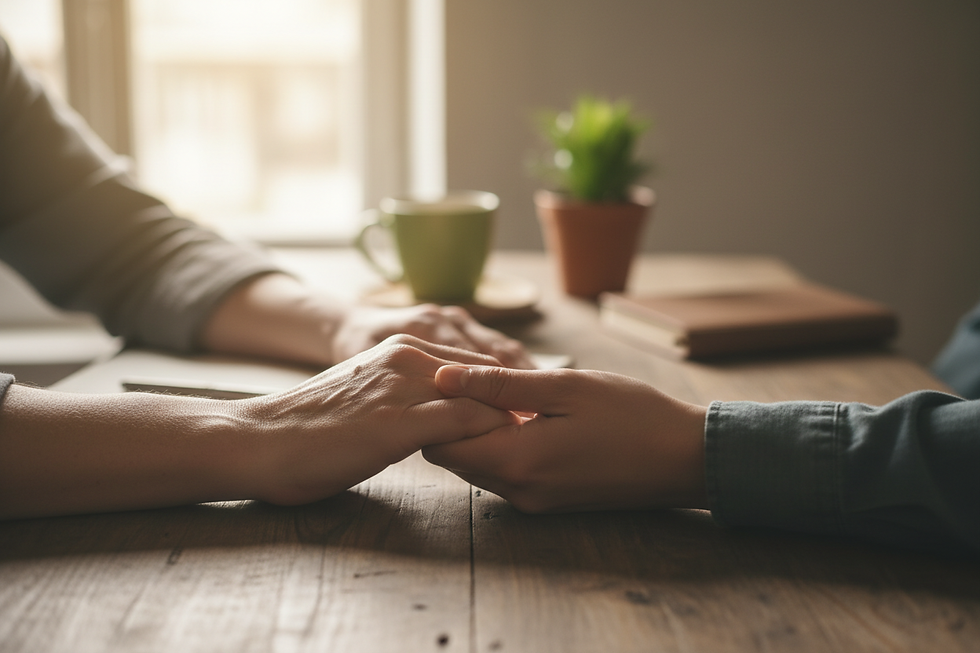
For many people, adversity damages not just their sense of the world but their trust in others. This is especially true when the harm came from within a relationship, through abuse, betrayal, or neglect. Rebuilding trust after this kind of injury does not happen through a single conversation or a decision to "let it go." It is a gradual, layered process.
Psychology points to a three-phase model that often describes how this unfolds:
Phase 1: Stabilization. Before any deep reconnection can happen, the immediate environment needs to feel safe. This means clear boundaries, predictable behavior, and an end to whatever caused the harm in the first place. Without this foundation, nothing built on top of it will hold.
Phase 2: Transparency and accountability. Trust is rebuilt through consistent, verifiable action over time, not promises. In therapeutic frameworks like the Gottman Method, this phase focuses on what are called "sliding door moments": the small daily opportunities to either turn toward someone or turn away. Every small act of reliability matters.
Phase 3: Integration. This is where the person begins to carry a new narrative, one that holds what happened without being defined by it. The relationship, whether with a friend, family member, partner, or support network, becomes part of the healing rather than a reminder of the wound.
Research suggests that when both people involved in a repair process are genuinely committed, there is a 70% success rate in rebuilding meaningful trust, typically over a period of 3 to 12 months of consistent effort.
The Role of Community and Peer Support

Recovery does not only happen in one-on-one relationships. Community, in the broader sense, plays an equally important role. Peer support, specifically connecting with others who have lived through similar experiences, has been shown to be comparably effective to professional-led skill-building in improving mental health outcomes.
There is something unique about being supported by someone who genuinely understands your experience, not because they read about it, but because they have been there. It reduces shame, normalizes the recovery process, and offers a living example that things can get better.
Support groups, community organizations, faith communities, and informal networks of people with shared experience all serve this function. The specific form matters less than the quality: genuine connection, mutual respect, and a culture of not leaving people behind.
Interestingly, research has found that perceived social support, simply believing that people are there for you if you need them, can be more predictive of positive outcomes than the actual support received. Knowing you are not alone carries real weight, even before a single conversation happens.
When Support Feels Hard to Access
It would be incomplete to talk about the power of supportive relationships without acknowledging how hard they can be to find or maintain, especially during the hardest seasons of life.
Severe distress can make it difficult to reach out. PTSD symptoms, depression, and shame often create withdrawal at precisely the moment connection is most needed. There is also the real challenge that not everyone has access to a safe, reliable support network. Family relationships may be the source of harm. Friendships may have faded during a period of struggle. Financial or geographic barriers may limit access to professional support.
None of this means the path is closed. It means the starting point may be smaller than expected, and that is okay. Sometimes the first relationship is with a therapist. Sometimes it is with a peer support group. Sometimes it is one person, met in an unexpected place, who simply makes you feel less alone for an hour.
Building a support network does not require overhauling your entire life at once. It starts with small acts of reaching out, and it grows from there.
How to Show Up for Someone Who Is Healing
If someone in your life is recovering from adversity, you do not need to be a therapist to help. You need to be consistent, patient, and honest about your own limits.
A few things that genuinely make a difference:
Ask, then listen. "How are you, really?" followed by actual silence and attention is worth more than any advice you could give.
Show up repeatedly, not just once. Checking in after the crisis has passed, when the world has moved on but the person is still working through it, is one of the most powerful things you can do.
Do not push for a timeline. Healing is not a project with a deadline. Asking "aren't you feeling better by now?" adds pressure without helping.
Believe what you are told. One of the most healing things a person can experience is being believed without needing to prove their pain is valid.
Know your limits. Supporting someone through serious adversity can be emotionally demanding. It is okay to also seek your own support. Sustainable care requires that you take care of yourself too.
Recovery Is Relational
There is no single relationship that heals everything, no conversation that closes every wound, and no community that makes recovery effortless. But the evidence is consistent: people who feel supported recover more fully, more quickly, and with greater resilience than those who face adversity alone.
Positive childhood experiences that include caring adults, trusted peers, and safe environments make adults 72% less likely to experience depression later in life. Robust social networks are linked to a 45% increase in life expectancy. These numbers point to something we may have always known intuitively: being genuinely connected to others is not a luxury. It is part of what keeps us well.
Whether you are the one healing or the one supporting someone who is, the relationship itself is doing work. Every consistent, honest, non-judgmental interaction is a small act of repair. Over time, those moments add up to something that looks like recovery.
Healing is not always a solo journey. Often, it is something we build together.


Comments